
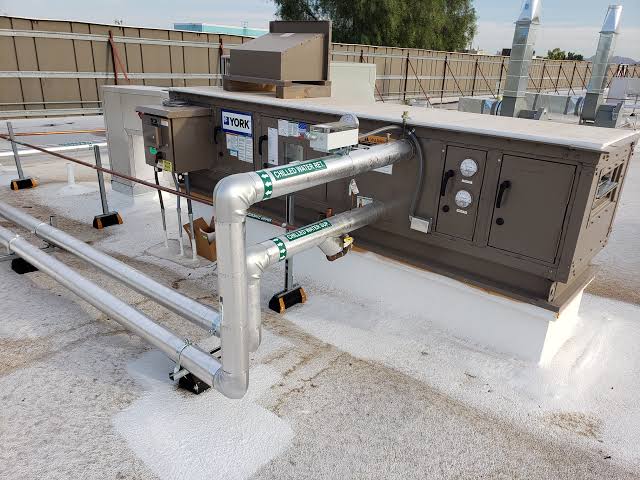
There is a duct problem hiding inside millions of American homes, and most of the homeowners in those homes have no idea it exists.
The problem is energy loss. In a conventional central air conditioning system, the air your equipment conditions has to travel from the unit, through a network of ducts — often running through attics, basements, and wall cavities — before it reaches the room you’re actually trying to cool or heat. Along the way, it leaks. It heats up or cools down from contact with duct surfaces. It escapes through unsealed joints. By the time conditioned air arrives at the vent, a significant portion of the energy used to produce it has already been wasted.
The U.S. Department of Energy has quantified this loss: ductwork in central forced-air systems can account for more than 30 percent of energy consumption for space conditioning, particularly when ducts run through unconditioned spaces like attics. That means roughly one-third of your heating and cooling bill may be paying for air that never actually reaches you in a useful form.
Ductless mini-split systems solve this problem by eliminating ducts entirely. And in 2026, they are growing faster than any other category in the residential HVAC market — driven by improved technology, broader climate compatibility, rising installation costs for ducted retrofits, and a consumer base that is increasingly aware of exactly what duct losses are costing them.
What a Mini-Split Actually Is
A ductless mini-split system consists of two primary components: an outdoor compressor unit and one or more indoor air handlers, connected by a refrigerant line that passes through a small three-inch hole in the wall. No ductwork. No major structural modifications. No seasonal installation or removal of heavy window units.
The indoor air handler delivers conditioned air directly into the room where it’s installed. There is no middleman. <cite index=”3-1″>Without ducts, mini-splits avoid the energy losses associated with ductwork in central forced-air systems, which can account for more than 30 percent of energy consumption for air conditioning.</cite> The efficiency gains are immediate and measurable from the first month of operation.
<cite index=”1-1″>Mini-splits are a type of heat pump. They cool your home by taking heat from the indoor air and sending it outside. They can also heat your space by working in reverse: they absorb heat from the outside air and move it indoors. These systems come in two parts: there’s an outdoor compressor that’s connected to an indoor unit, called an air handler.</cite>
The multi-zone configuration is where mini-splits become particularly powerful for whole-home applications. <cite index=”1-1″>A system can have air handlers cooling different rooms inside with only one compressor outside. If you want to cool multiple zones, installing a system that can handle multiple indoor units can save you money.</cite> Each indoor head operates independently, so you’re only conditioning rooms that are actually occupied — a level of zoning control that ducted systems simply cannot replicate without expensive damper and control systems.
The Efficiency Numbers
The efficiency gap between ducted and ductless systems is one of the most significant and least understood differences in residential HVAC.
<cite index=”8-1″>Ducted heat pumps typically achieve efficiency ratings between 15.2 to 25 SEER2, while ductless mini-splits can achieve ratings between 15.2 and 35 SEER2.</cite> At the top of the range, the best ductless systems are operating at efficiencies that have no equivalent in ducted equipment.
The real-world energy savings compound through two mechanisms. First, elimination of duct losses recovers that 30-percent-plus that conventional systems waste in transit. Second, the zone-by-zone control means the system runs only where and when it’s needed. <cite index=”4-1″>Daikin’s Intelligent Eye sensor, for instance, detects human presence and dials output down when rooms empty out. In testing, that feature cut energy consumption by roughly 20 to 25 percent in spaces that sat vacant for portions of the day.</cite>
The combination of these factors produces real utility bill reductions. Some high-efficiency configurations achieve a 40 percent reduction in monthly cooling costs compared to aging central systems — a meaningful figure when averaged across an entire cooling season.
Where Mini-Splits Make the Most Sense
Mini-splits excel in specific situations that ducted systems handle poorly — and understanding where they’re the clear right choice simplifies the purchase decision considerably.
Homes without existing ductwork. Older homes built before central air conditioning was standard often lack ductwork entirely. Adding ducts to these homes is invasive, expensive, and structurally complex — involving opening walls, ceiling, and floor cavities. <cite index=”3-1″>Mini-splits are commonly used in multifamily housing and as retrofit add-ons for homes with non-ducted heating systems like hydronic, radiant panels, and space heaters.</cite> A mini-split installation, by contrast, requires only the small refrigerant line penetration and electrical connection — a fraction of the disruption.
Room additions and converted spaces. A finished basement, attic conversion, sunroom, garage workshop, or home office addition presents a classic mini-split use case. <cite index=”9-1″>Ductless systems are ideal for problem areas like sunrooms, finished basements, attics, garage conversions, and home offices.</cite> Extending existing ductwork to a new room addition often requires upsizing the central system to maintain airflow balance throughout the house — a cost that frequently makes a standalone mini-split the more practical option.
Zone comfort problems. Every home has rooms that the central system can’t keep comfortable — too hot in summer, too cold in winter, regardless of what the thermostat says. These are typically rooms far from the air handler, on the home’s sun-exposed corners, or with different thermal characteristics from the rest of the house. A mini-split targeted at a specific problem zone solves the issue directly without requiring modification to the whole-home system.
High-performance and net-zero construction. <cite index=”3-1″>Mini-split heat pumps are popular in high-performance, net-zero energy homes.</cite> In a tightly built, well-insulated envelope where heating and cooling loads are minimal, a mini-split is often a more precisely sized solution than a central system — avoiding the oversizing that causes short-cycling and humidity control problems in efficient homes.
Multi-Zone Systems: One Compressor, Whole Home
For homeowners considering mini-splits as a primary HVAC solution rather than a supplement, multi-zone configurations deliver whole-home coverage without whole-home ductwork.
<cite index=”4-1″>Single-zone setups handle one room and are the most cost-effective way to cool or heat a specific space. Multi-zone systems connect two to five indoor heads to a single outdoor compressor and run $3,000 to $20,000 or more depending on configuration and brand. Each head operates independently, so you only condition rooms you’re using.</cite>
The independent operation of each zone is not a minor feature. In a typical household, bedrooms are unoccupied for most of the day; living areas are unoccupied at night; a home office may need conditioning only during work hours. A central system conditions the entire home uniformly regardless of occupancy. A multi-zone mini-split runs each head based on its individual zone’s needs — producing efficiency gains that accumulate meaningfully over a full season.
<cite index=”2-1″>Wall-mounted mini-split systems are particularly valued for their high energy efficiency ratings, as they come equipped with advanced inverter compressors that optimize power consumption based on real-time room conditions.</cite> These variable-speed inverter compressors are the core technology that makes this zone-specific efficiency possible — modulating output continuously to match the precise demand of each room rather than cycling on and off at full capacity.
Quiet Operation: A Difference You Notice Daily
One of the practical advantages of mini-splits that surprises new owners is how quiet they are in operation. The loudest mechanical components — the compressor and condenser fan — are located in the outdoor unit. <cite index=”9-1″>With most of the mechanical components located outside the home, the result is consistent, comfortable temperatures without the constant noise.</cite>
The indoor air handlers, operating at variable speeds via inverter compressors, run at their lowest speeds most of the time — maintaining temperature continuously rather than blasting air periodically when the thermostat triggers. The operational sound level of a well-sized mini-split in a bedroom is comparable to background ambient noise. For light sleepers, allergy sufferers sensitive to air movement, and anyone who has tolerated the intermittent roar of a window unit, the difference is notable.
The DIY Option: MRCOOL and the Self-Install Category
For homeowners comfortable with home improvement projects, a genuinely new category has emerged in mini-splits: factory pre-charged systems designed for self-installation without an HVAC license.
<cite index=”4-1″>MRCOOL built its entire brand around the DIY approach. Pre-charged quick-connect line sets eliminate vacuum pumps and refrigerant gauges. MRCOOL’s Smart HVAC app walks you through each step. MRCOOL’s DIY 5th Gen remains the only mini-split you can install without an HVAC license, special tools, or voided warranty.</cite>
It is worth being clear about the scope of this option. <cite index=”1-1″>DIY models still require relatively precise installation work. Most mini-split systems require professional installation.</cite> The pre-charged line sets eliminate the refrigerant handling that requires an EPA 608 certification, but the installation still involves electrical work, mounting the indoor and outdoor units correctly, routing and connecting the line set, and ensuring proper drainage. Homeowners who are not comfortable with these tasks — or whose local building codes require permits and licensed contractor sign-off — should have a professional handle the installation regardless of the equipment choice.
For skilled DIYers in eligible jurisdictions, however, the self-install category opens a meaningful cost reduction pathway that didn’t exist a few years ago.
What to Know About Installation Costs and Considerations
<cite index=”1-1″>The mini-splits in current ratings range from $799 to more than $1,860, not including installation costs. These prices are far higher than those for portable or window air conditioners, but mini-splits are designed to cool large spaces and run for long periods, giving you a feeling closer to central air conditioning.</cite>
Professional installation adds significantly to the total cost. A single-zone system professionally installed typically runs $3,000 to $5,000 in total. Multi-zone systems covering three to four rooms can run $8,000 to $20,000 or more depending on the number of zones, brand, and local labor rates.
When shopping for installation, <cite index=”1-1″>getting three bids is recommended. Keep in mind that an HVAC professional may only work with one mini-split manufacturer and specialize in its models.</cite> This matters because installer familiarity with a specific brand affects both the quality of the installation and the calibration of the system for your specific space. An installer experienced with Mitsubishi’s Hyper-Heat line, for instance, will configure that system more accurately than a generalist installer who installs it infrequently.
<cite index=”5-1″>One potential drawback worth noting: ductless mini-split systems require an indoor unit in every room. While modern designs are sleek, a wall-mounted unit is visible and may disrupt specific interior design aesthetics.</cite> For homeowners who find the wall-mounted head objectionable, ceiling cassette and floor-mounted configurations are available from most major manufacturers, though these typically cost more to install.
The Refrigerant Transition and Mini-Splits
Like all new HVAC equipment in 2026, new mini-split systems ship with next-generation refrigerants rather than R-410A. R-32 is the primary refrigerant used in ductless mini-splits from most manufacturers, while R-454B is more common in ducted systems. <cite index=”2-1″>Consumers are increasingly adopting Wi-Fi-enabled, inverter-based mini-splits compatible with smart thermostats, valuing their precise and energy-efficient operation.</cite> The transition to R-32 is notable in that it carries a Global Warming Potential of 675 — a 68 percent reduction compared to R-410A — making new mini-split installations meaningfully lower in climate impact than the equipment they replace.
The Bottom Line
Ductless mini-splits in 2026 are not a niche technology for unusual homes. They are a mature, well-proven category delivering efficiency ratings that ducted systems cannot match, zone control that saves energy every day through independent room management, installation flexibility for spaces that would require significant renovation to accommodate ductwork, and quiet operation that makes a tangible difference in daily comfort.
The upfront cost is higher than window units and often competitive with or above basic central system installations. But the comparison that matters is total cost of ownership across a 15 to 20-year lifespan — factoring in the energy savings from eliminated duct losses, zone-specific operation, and inverter compressor efficiency. On that comparison, mini-splits increasingly win across a wider range of home situations than most homeowners realize.
If your home has a room that’s never comfortable, a space you’re adding or converting, or ductwork that’s aging and leaky, 2026 is a particularly good time to take a serious look at what a ductless system would actually cost you — and save you — over the long run.
Compare ENERGY STAR certified mini-split models at energystar.gov, and consult a qualified HVAC contractor for a load calculation specific to your space before purchasing.