
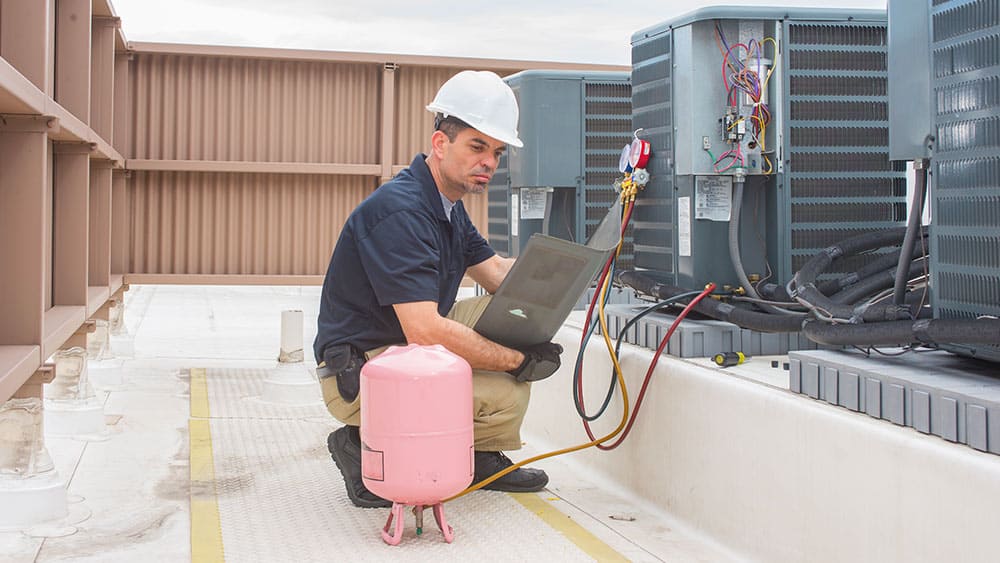
There is a crisis unfolding inside the HVAC industry. Not the kind that makes headlines, but the kind that shows up quietly every day in the form of delayed installs, overbooked service schedules, and contractors turning down work because they simply don’t have the bodies to do it.
The numbers are stark. The HVAC industry is currently facing a shortage of approximately 110,000 technicians, a gap that has been growing steadily for years. Experts project the shortage could reach 225,000 technicians by 2027, resulting in 1.8 open jobs for every available technician. At the same time, over 25,000 skilled HVAC technicians leave the industry each year, while fewer join.
For the industry at large, this is a problem. For the individual entering — or already working in — the trade, it is something else entirely: leverage.
This article is written for technicians, apprentices, and anyone considering HVAC as a career path. The shortage is real. The opportunities it creates are equally real, and understanding how to take advantage of them requires knowing which skills the market is actually paying for.
How Did We Get Here?
The HVAC technician shortage is not the result of a single cause. It is the compounding effect of several forces that have been building simultaneously for more than a decade.
An aging workforce. The average HVAC technician is 40 years old. Five technicians are retiring for every two entering the field. When experienced technicians exit, they don’t just leave job openings — they take with them decades of diagnostic intuition and hands-on knowledge that cannot be instantly transferred to a new hire.
The college-or-nothing narrative. For years, there has been a strong cultural emphasis on traditional academic paths. Many students have been encouraged to pursue university degrees, while vocational careers receive less attention. As a result, fewer people consider HVAC or any skilled trade as a first-choice career. The reality is that this narrative has always been wrong from a financial standpoint, and in 2026 it is increasingly visible as such.
Rising complexity. Technology is supposed to make industries more efficient, but in HVAC, it has created a paradox. As systems become smarter and more energy-efficient, they also become more complex to install and maintain. This increases reliance on highly skilled technicians even as the pool of those technicians becomes smaller.
The refrigerant transition. The industry-wide move from R-410A to A2L refrigerants like R-454B has added an urgent layer of retraining to the existing workforce problem. Every technician working on new equipment now needs updated handling knowledge, safety certification, and familiarity with tools and procedures that simply didn’t exist in previous years.
The result is a structural imbalance between supply and demand that is not resolving quickly — and that creates a rare window for workers in the trade to negotiate from a position of genuine strength.
What This Shortage Means for Your Paycheck
Supply and demand works in labor markets the same way it works everywhere else. When there are 1.8 open HVAC jobs for every available technician, employers compete for workers — not the other way around.
The Bureau of Labor Statistics reports a median annual salary of $59,810 for HVAC mechanics and installers. But that median significantly understates the market for experienced and certified technicians. More recent industry data shows experienced HVAC technicians earning a median closer to $90,528 annually, with top performers in high-demand states earning significantly more.
The shortage gives skilled technicians unprecedented leverage. With 110,000 open positions and an industry projected to face 225,000 technician gaps by 2027, supply-demand dynamics are pushing wages up approximately 8% annually — far above general wage inflation.
Geographically, the disparity in compensation is significant. In states such as California, New York, and Texas, HVAC technicians are in particularly high demand, with the job market expected to grow by 21% in Texas, 20% in New York, and 14% in California over the next decade according to the BLS.
The financial case for entering the trade is also worth examining relative to the alternative. Unlike a four-year college degree — which typically costs $40,000 to $100,000 or more and takes four years to complete — HVAC training programs can be completed in six months to two years, at a fraction of the cost, while earning income through apprenticeship. The student debt that burdens many college graduates simply doesn’t apply. You graduate into a market that is actively competing for you.
The Skills That Pay the Premium
Not all HVAC certifications are equal, and the market in 2026 is paying measurably more for technicians who have invested in specific skills. Understanding where the premium is concentrated helps any technician prioritize their continuing education.
EPA Section 608 Certification remains the legally required baseline. It is required for any technician who handles refrigerants, applies nationwide without exception, and does not expire once earned. Every practicing technician must have it. But it is a floor, not a ceiling.
A2L Refrigerant Safety Training is rapidly becoming what EPA 608 used to be — a minimum threshold of employability for anyone working on new equipment. Under the EPA’s Technology Transitions program, manufacturers have been prohibited from producing new residential split systems and heat pumps using R-410A since January 1, 2025. New equipment now uses A2L refrigerants — primarily R-454B for ducted systems and R-32 for ductless mini-splits. A2L refrigerant training is now required for all HVAC technicians working with new systems, and those who train early will have a competitive edge. A2L training addresses the mildly flammable classification of these refrigerants — including updated safety protocols, the use of left-handed threaded fittings, pressure relief valve differences, and proper leak detection requirements that are now code in new installations.
NATE Certification (North American Technician Excellence) is the most respected voluntary credential in the industry. NATE-certified technicians earn 10 to 15 percent more on average than non-certified peers, and NATE certification must be renewed every two years through continuing education to keep technicians current. NATE offers specialty certifications across air conditioning installation and service, heat pump installation and service, gas heating, air distribution, and low-GWP refrigerants — each of which adds documented credential value.
Heat Pump Specialization may be the single highest-value skill investment a technician can make right now. Heat pump adoption is growing rapidly across all climate zones, driven by federal tax incentives, electrification mandates in new construction, and genuine consumer demand for more efficient systems. Heat pump technicians often earn premium wages because the technology is complex and fewer technicians currently have specialized training. Cold-climate heat pump systems in particular — which require knowledge of variable-speed inverter compressors, Enhanced Vapor Injection technology, and dual-fuel hybrid configurations — are in high demand and short supply of qualified installers.
Building Automation and Smart Controls represent the emerging premium tier. As HVAC systems increasingly incorporate AI thermostats, IoT sensors, zone control systems, and integration with building management software, technicians who understand the electrical and digital layers of these systems command rates well above standard service technicians. Smart HVAC systems and IoT integration add a layer of complexity that certified technicians with relevant training are better prepared to handle, and certified workers in these specialties typically earn 15 to 25 percent more than their non-certified counterparts.
Energy Auditing (BPI/RESNET) is a growth niche that many HVAC technicians overlook. Technicians with energy auditing skills — BPI certification, RESNET HERS rating — can provide assessments and help customers access rebates and tax credits. The Inflation Reduction Act has expanded opportunities in this niche significantly. As the federal incentive landscape for home energy efficiency continues to drive homeowner interest in upgrades, a technician who can walk a customer through a comprehensive efficiency assessment and connect them to available incentives is operating at a fundamentally different level than a standard service tech.
The New Technician’s Competitive Advantage
There is an interesting dynamic at work for technicians entering the trade today versus those who have been in it for twenty years. Veteran technicians carry irreplaceable diagnostic experience, but they also carry habits and training built around systems that are being phased out. New entrants have the opportunity to build their skills natively around the technologies that define the industry’s future.
A technician who enters the trade in 2026 and immediately pursues A2L certification, heat pump specialization, and smart controls training isn’t catching up to the field — they are building expertise in the areas where the most experienced technicians are currently the least credentialed.
Because of these innovations, technicians with specialized training in modern HVAC systems are highly valuable. As climate patterns become more unpredictable, reliable heating and cooling systems are more important than ever.
Wall Street has noticed. BlackRock, the world’s largest asset manager, launched a $100 million “Future Builders” initiative that specifically names HVAC technicians as part of the skilled trades workforce it aims to grow. When one of the world’s largest investment firms starts funding the career pipeline of a trade, the demand signal is difficult to overstate.
What Employers Are Offering in 2026
The shortage has changed the employer-employee dynamic in concrete, practical ways. For most HVAC technicians in 2026, it’s no longer enough for an employer to offer a job — they need to offer a career path with potential for promotion and increased pay, a supportive environment and the opportunity to learn, and a reason to choose their company over the competition.
The best HVAC employers in 2026 are investing in their technicians’ continuing education, offering tuition reimbursement for certifications, providing structured pathways from apprentice to senior technician to foreman or service manager, and offering competitive benefits including health insurance, retirement contributions, and performance bonuses. The shortage also creates negotiation leverage: skilled technicians can demand better benefits, flexible scheduling, and professional development opportunities.
Technicians who recognize their market value and approach employment decisions accordingly — comparing not just base pay but training investment, certification support, and career advancement — are positioned to benefit significantly from the current imbalance.
The Path In
For anyone not yet in the field, the entry paths are multiple and well-established. Multiple entry paths exist: trade school (six months to two years), community college degree programs, apprenticeships, or union programs, plus foundational certifications like EPA 608 and NATE.
Apprenticeships in particular offer an underappreciated combination of benefits: you earn while you learn, gain real-world experience under a journeyman technician, and avoid the student debt load that plagues four-year graduates. Union apprenticeship programs typically last four to five years and include progressive wage increases tied to completed training milestones.
For those already in the trade who want to increase their earning potential, the path is straightforward: stack certifications methodically. EPA 608 Universal is the starting point. A2L safety training is the immediate next step for anyone working on new equipment. NATE certification in your primary specialty follows. Heat pump or building automation specialization represents the premium tier.
The shortage is creating an industry that is, for the first time in a long time, competing for you. Understanding what skills command the highest premium — and pursuing them deliberately — is how you turn that structural imbalance to your long-term advantage.
To explore HVAC certification pathways, visit the NATE website at natex.org, or search for EPA 608 certification providers through the EPA’s Section 608 Technician Certification program. For apprenticeship opportunities, the U.S. Department of Labor’s Apprenticeship.gov database lists registered HVAC programs by state.