
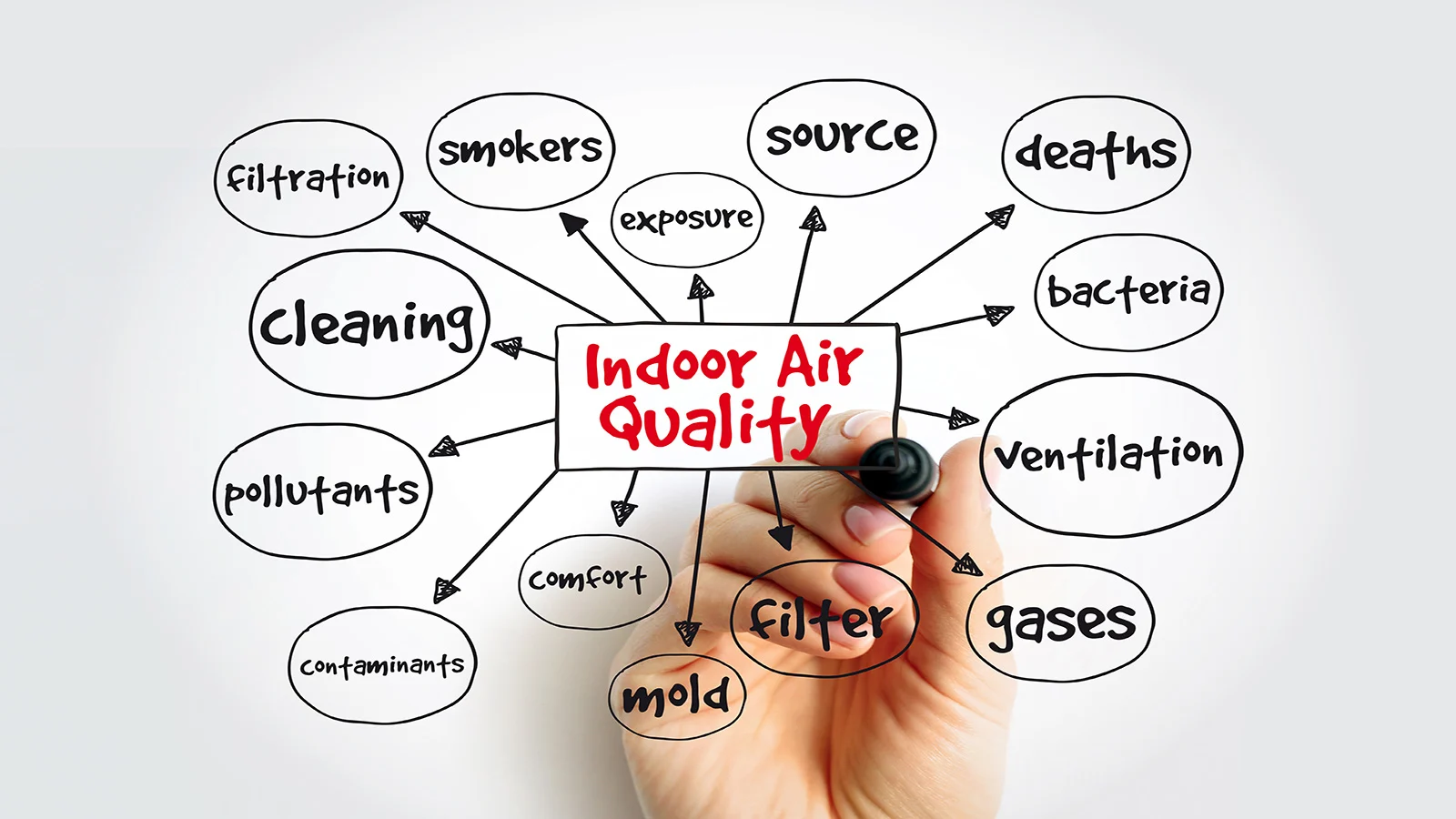
Indoor air quality (IAQ) has evolved from a niche facility-management consideration into a major investment priority across the commercial HVAC industry, with building owners increasingly allocating budgets toward ventilation upgrades, filtration improvements, and air-quality monitoring systems.
Industry experts report that demand for IAQ-related projects remains strong across education, healthcare, office, hospitality, and retail sectors as organizations seek to improve occupant comfort while meeting growing expectations surrounding environmental quality.
The trend reflects a broader shift in how facilities are evaluated and managed.
Historically, HVAC systems were primarily judged on their ability to maintain temperature and humidity levels. Today, building operators are paying closer attention to airborne particulates, carbon dioxide concentrations, volatile organic compounds, and ventilation effectiveness.
Many organizations view air quality as directly connected to occupant productivity, wellness, and overall building performance.
Educational institutions have emerged as one of the most active sectors for IAQ investment.
School districts and universities continue upgrading aging ventilation infrastructure, often incorporating higher-efficiency filtration systems and expanded outdoor air capabilities. Administrators increasingly view air quality improvements as long-term investments in healthier learning environments.
Healthcare facilities face even stricter requirements
Hospitals, clinics, and specialized treatment centers rely on sophisticated HVAC systems to maintain infection-control protocols and ensure environmental stability. As healthcare infrastructure expands, demand for precision air-management technologies continues to grow.
Corporate office environments are also driving activity
As employers compete to attract workers back into physical workplaces, many are using indoor air quality initiatives as part of broader workplace modernization efforts.
Building managers report growing interest in real-time monitoring platforms that provide visibility into air-quality conditions throughout a facility. Digital dashboards displaying ventilation rates, particulate levels, and environmental metrics are becoming increasingly common in newer commercial developments.
Manufacturers have responded by expanding product portfolios focused on air purification and advanced filtration.
The market has seen increased demand for high-efficiency filters, ultraviolet treatment systems, bipolar ionization technologies, and integrated air-quality sensors.
While technologies vary considerably, buyers are placing greater emphasis on measurable performance and verified outcomes.
Industry consultants note that energy efficiency remains an important consideration.
Increasing ventilation rates and upgrading filtration systems can impact energy consumption if not properly managed. Consequently, many projects combine IAQ improvements with advanced controls and energy-recovery technologies designed to offset operational costs.
The emergence of smart-building platforms has further accelerated adoption
Building automation systems can now dynamically adjust ventilation rates based on occupancy levels and environmental conditions, helping maintain air quality while minimizing unnecessary energy use.
Regulatory developments are also influencing market behavior.
Several jurisdictions have introduced new guidelines and standards related to ventilation performance, prompting building owners to evaluate existing infrastructure and identify upgrade opportunities.
For HVAC contractors, the focus on air quality is creating new service opportunities that extend beyond traditional heating and cooling work. Assessment services, system commissioning, monitoring programs, and IAQ consulting are becoming increasingly important revenue streams.
Industry analysts expect investment momentum to remain strong throughout the remainder of the decade.
As occupants become more aware of indoor environmental conditions and organizations continue emphasizing wellness initiatives, air quality is likely to remain a central component of commercial HVAC strategy.
The growing recognition that HVAC systems influence more than temperature alone represents a significant evolution for the industry—one that is reshaping equipment design, facility management practices, and long-term building investment decisions.