
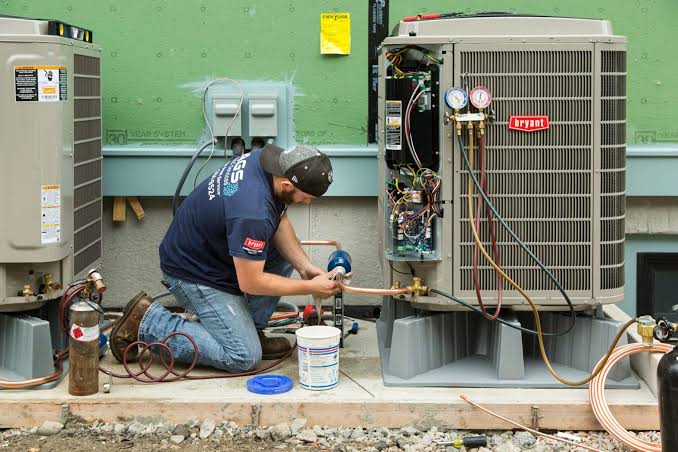
The HVAC industry continues to grapple with a persistent shortage of skilled labor, prompting contractors, manufacturers, distributors, and industry organizations to pursue new strategies aimed at attracting talent and improving workforce productivity.
Industry leaders increasingly identify workforce constraints as one of the most significant challenges facing the sector, particularly as demand for installation, maintenance, retrofit, and energy-efficiency projects continues to expand.
Contractors across multiple regions report difficulty filling technician positions despite strong business pipelines and growing customer demand.
The issue affects organizations of all sizes, from independent service providers to national mechanical contracting firms.
Several factors are contributing to the shortage.
A significant portion of the HVAC workforce is approaching retirement age, while fewer young workers are entering skilled trades compared to previous generations. At the same time, increasing technological complexity requires technicians to develop broader skill sets encompassing electrical systems, controls, software platforms, and connected equipment.
As HVAC systems become more sophisticated, workforce development requirements continue to expand.
Industry associations have responded by strengthening apprenticeship programs and promoting trade education initiatives. Many organizations are working closely with technical schools, vocational institutions, and community colleges to increase awareness of HVAC career opportunities.
Manufacturers have also become active participants.
Equipment producers are investing in technical training centers, online education platforms, and certification programs designed to help technicians keep pace with evolving technologies.
Several major manufacturers report increased enrollment in training programs focused on controls, variable-speed equipment, refrigerant transitions, and building automation systems.
Contractors are adopting innovative recruitment approaches as well.
Many companies have expanded internship programs, accelerated career-development pathways, and introduced mentorship initiatives to improve retention and attract younger workers.
Compensation packages have also evolved in response to labor-market pressures.
Industry surveys indicate that wages for experienced technicians have increased substantially in many regions as employers compete for qualified talent.
While higher compensation helps attract workers, it also places pressure on operating margins and project costs.
Technology is emerging as a partial solution.
Remote diagnostics, predictive maintenance platforms, and connected service tools allow technicians to troubleshoot issues more efficiently, reducing the number of onsite visits required for certain maintenance activities.
Mobile applications and digital documentation systems are also streamlining administrative tasks, enabling technicians to spend more time performing revenue-generating work.
Some contractors are leveraging augmented reality tools to support field operations.
These technologies allow less-experienced technicians to receive guidance from remote experts, improving service quality while accelerating skill development.
The labor shortage is influencing customer purchasing behavior as well.
Many building owners increasingly favor equipment designed for easier installation, maintenance, and servicing. Products that reduce labor requirements throughout their lifecycle are gaining attention in both retrofit and new-construction projects.
Industry experts caution that workforce challenges are unlikely to disappear quickly.
The continued growth of electrification initiatives, sustainability projects, data center construction, and infrastructure modernization efforts is expected to sustain strong demand for HVAC services for years to come.
As a result, long-term workforce development remains a strategic priority across the industry.
Organizations that successfully combine recruitment, training, retention, and productivity-enhancing technologies are likely to gain a significant competitive advantage in an increasingly constrained labor environment.
For the HVAC sector, addressing workforce challenges has become more than a staffing issue—it is now a critical factor influencing growth, profitability, and the industry’s ability to meet future market demand.